Facebook Page vs Website in 2026: Which One Actually Gets Small Businesses More Customers?
Many small businesses still rely on a Facebook page instead of a website. In 2026, that decision costs more than ever — because Google AI Overviews, ChatGPT, and Perplexity recommend businesses from websites, not social posts. Stars Web Studio breaks down what each one can and cannot do.
Article guide On this page
"I already have a Facebook page — do I really need a website?" It is one of the most common questions small business owners ask, and in 2026 the answer matters more than ever. Not because Facebook stopped working, but because the way customers find businesses has fundamentally changed.
At Stars Web Studio, we speak to salon owners, tradespeople, dentists, restaurants, and local service businesses every week who run everything through Facebook. This guide is an honest comparison: what a Facebook page does well, where it silently loses you customers, and why the businesses winning in 2026 use both — with the website doing the heavy lifting.
What a Facebook Page Does Well
Let's be fair to Facebook first. A business page is free, quick to set up, and good at three things:
Community and updates — posting offers, photos of recent work, and staying visible to existing followers
Social proof — recommendations, comments, and shares from real local customers
Messaging — Messenger and WhatsApp make it easy for followers to reach you informally
For a brand-new business with zero budget, a Facebook page is better than nothing. The problem starts when it becomes your only online presence.
Where a Facebook Page Quietly Loses You Customers
1. You Are Invisible in AI Search
This is the biggest shift of 2026. When customers ask Google, ChatGPT, or Perplexity "best plumber near me" or "nail salon that does gel extensions in my area", the AI builds its answer from structured websites — clear service pages, locations, reviews, and schema markup. It cannot reliably extract that information from a feed of social posts. Businesses with only a Facebook page simply do not appear in these AI-generated recommendations. We covered exactly how this works in our guide on getting recommended by Google AI Overviews and ChatGPT.
2. You Don't Control the Platform
Facebook decides who sees your posts — and organic page reach has been shrinking for years. Your page can be restricted, hacked, or removed with no warning, and every follower you built goes with it. A website is an asset you own; a Facebook page is a profile you rent.
3. You Look Less Established Than Competitors
Around 81% of shoppers research a business online before buying. When they search your business name and find only a Facebook page while your competitor has a clean, professional website with services, prices, reviews, and a booking button — the trust gap is instant. With roughly 83% of small businesses now having a website, not having one increasingly signals "not a serious business" even when the work behind it is excellent.
4. Facebook Pages Barely Rank on Google
Individual Facebook posts are almost never shown for service searches like "kitchen fitter in Cork" or "dog groomer near me". Google ranks dedicated service pages with clear headings, locations, and structured data. A Facebook page gives Google — and now AI engines — almost nothing to work with.
5. No Clear Path From Visitor to Enquiry
A well-built website guides every visitor toward one action: call, book, or send an enquiry. A Facebook feed guides visitors toward scrolling. There is no service structure, no pricing context, no dedicated contact flow — which is why Facebook-only businesses lose leads they never even know existed.
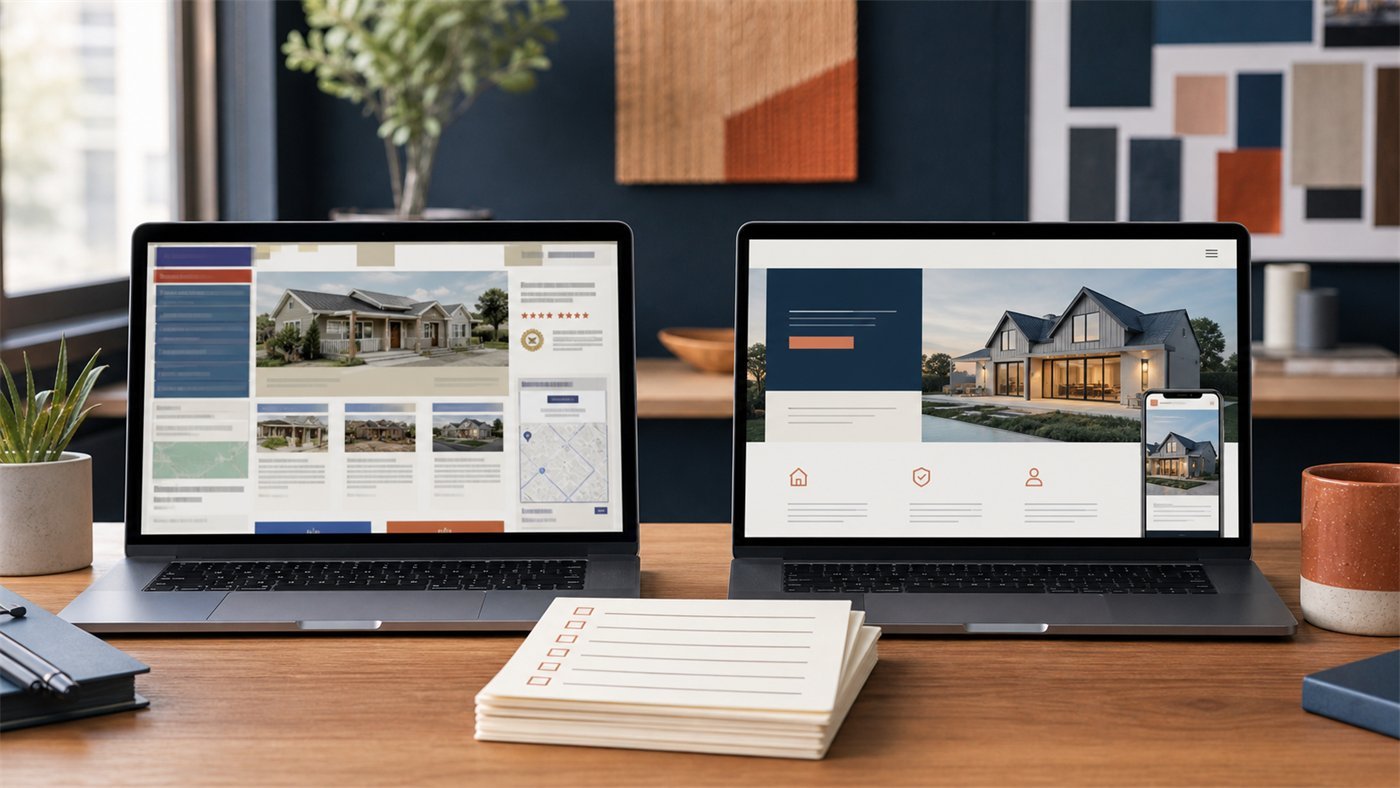
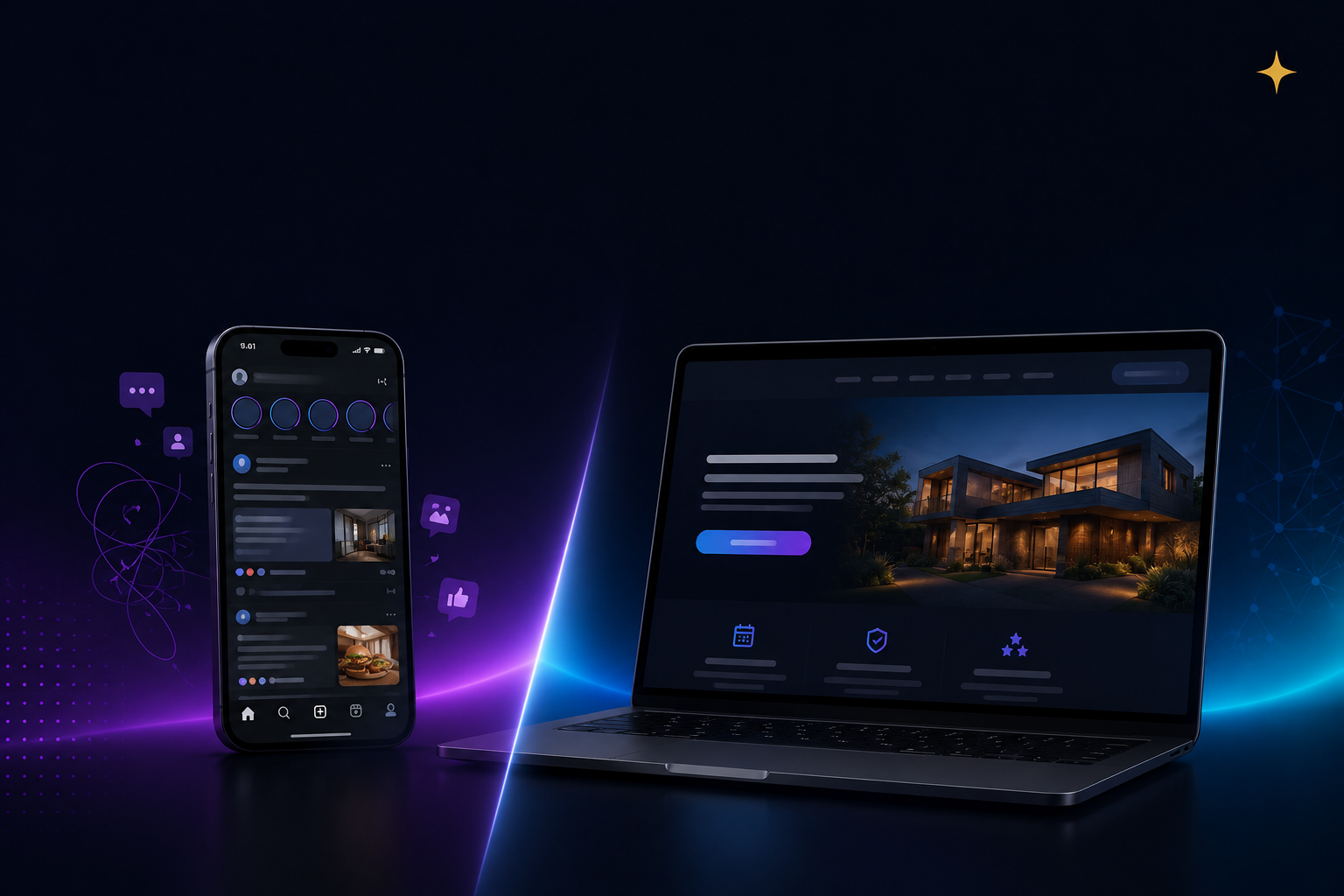
Facebook Page vs Website: Side-by-Side in 2026
Ownership: Facebook — rented profile, can vanish. Website — owned asset that grows in value.
Google rankings: Facebook — near zero for service searches. Website — every service page is a ranking opportunity.
AI search visibility: Facebook — invisible to AI Overviews and ChatGPT recommendations. Website — the source AI engines actually cite.
Trust and first impression: Facebook — casual, mixed content. Website — professional, controlled, conversion-focused.
Enquiries and bookings: Facebook — messages buried in an inbox. Website — structured enquiry forms, call buttons, and booking flows.
Cost: Facebook — free. Website — an investment that keeps producing leads long after social posts disappear from the feed.
The Right Answer in 2026: Website First, Facebook as Support
This is not really a versus. The businesses getting the most enquiries in 2026 use both — but in the right roles. The website is the foundation: it ranks on Google, gets cited by AI search engines, shows your services clearly, and converts visitors into enquiries. Facebook becomes the amplifier: it keeps existing followers engaged and pushes them back to the website to book.
Even better, an active Facebook page linked to your website strengthens your AI visibility. AI engines cross-reference your business details across the web — a consistent name, location, and service list on both your website and social profiles builds the trust signals that get you recommended. You can see how we structure this for real businesses across beauty, dental, automotive, food, and home services in the Stars Web Studio portfolio.
"But My Customers All Come From Facebook"
Some do — the ones who already follow you. The customers you are missing are the ones searching Google and asking AI tools for a business like yours right now, who have never heard of you. Facebook keeps the audience you have. A website brings you the audience you don't. Relying on Facebook alone means competing only for repeat and referral business while competitors with proper website design and SEO setup collect the new searches every single day.
Frequently Asked Questions
Is a free Facebook page enough for a small business in 2026?
Only for staying in touch with existing followers. For being found by new customers on Google and in AI search results, a website is required — AI engines and search rankings are built on structured websites, not social feeds.
Will a website replace my Facebook page?
No — they do different jobs. The website wins new customers through search and AI recommendations; Facebook keeps your existing audience engaged and sends them back to the website to book or enquire.
How much does a small business website cost?
It ranges widely depending on size and features. At Stars Web Studio we remove the risk entirely: we build a free demo concept first, so you see exactly how your website could look before paying anything.
Can a website really get me enquiries from ChatGPT and Google AI?
Yes — when it is structured for it. Clear service pages, real reviews, schema markup, and consistent business details are what AI engines extract and cite. That structure is built into every website we create.
See What Your Business Website Could Look Like — Free
Stars Web Studio builds clean, mobile-friendly websites for small businesses across the UK, Ireland, the US, Canada, Belgium, and South Africa — designed to rank on Google, get recommended in AI search, and turn visitors into enquiries. If you are running your business on Facebook alone, request a free demo and see the difference side by side before deciding anything.