Mobile app development services
Build the smallest useful app first.
We turn a business need into a focused mobile product with clear journeys, practical technology choices and a launch plan grounded in real users.
Successful apps earn a place in someone’s routine.
A mobile app is valuable when it helps a customer or team complete an important task more easily than the alternatives. That may be booking, ordering, tracking, messaging, managing field work or accessing a service repeatedly. The project should begin with that task—not a long list of features.
We use product discovery to clarify users, workflows, data, integrations and the first release. This creates a shared definition of the minimum viable product and exposes expensive assumptions before they are buried in code.
Design and engineering then move together. Interface decisions consider accessibility, platform behaviour, unreliable connections, permissions and error states, while technical decisions consider maintainability, security and the systems the app must connect to.
What success looks like
A focused product with room to learn and grow.
A validated first release
The MVP concentrates budget on the core job users need to complete and the evidence needed for the next decision.
Clearer user journeys
Flows, navigation, states and content are designed around real tasks rather than a desktop website copied into an app.
Sensible technical foundations
Architecture and integrations are chosen for the scope, team and expected growth—not fashion alone.
A plan beyond launch
Analytics, support, app-store updates and future iterations are considered before the first release ships.
Scope made visible
End-to-end support from product question to release.
Product discovery
User groups, core jobs, constraints, integrations and success measures are clarified with stakeholders.
MVP scope and roadmap
Features are prioritised into a realistic first release and a transparent list of later opportunities.
UX and interface design
Flows, wireframes, prototypes and visual components are tested against the core tasks and edge cases.
Application development
The agreed iOS, Android or cross-platform product is built with maintainable components and reviewable milestones.
Backend and integrations
Where required, the app connects to secure APIs, authentication, notifications, payments or existing business systems.
Testing and release support
Priority devices, permissions, failures and store requirements are reviewed before submission and launch.
A transparent process
Reduce product risk one decision at a time.
-
01
Define the job
We identify the user, problem, business case and evidence that would make the app worth continuing.
-
02
Prototype the journey
Key flows are made visible early so assumptions can be discussed before full development.
-
03
Build the MVP
The first useful release is developed in reviewable stages with integrations and edge cases included.
-
04
Release and improve
We support store preparation, launch checks and prioritisation based on real usage and feedback.
Relevant work, shown honestly
Examples selected for their service, industry or market relevance to Mobile App Development. Each project states whether it is client work or a concept demo.
 Automotive
Concept Project
Automotive
Concept Project
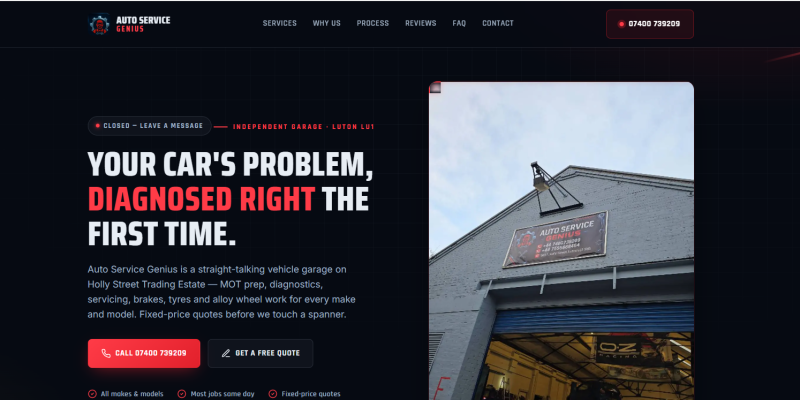
Auto Garage Website Design — Auto Service Genius, Luton UK
Vehicle Garage & MOT Testing Centre · United Kingdom
Diagnostics-led website for an independent Luton garage — MOT testing, full service menu, live job readout, facility showcase, and a service area covering Bedfordshire and Hertfordshire. Built to win 'garage near me' searches.
 Beauty & Salon
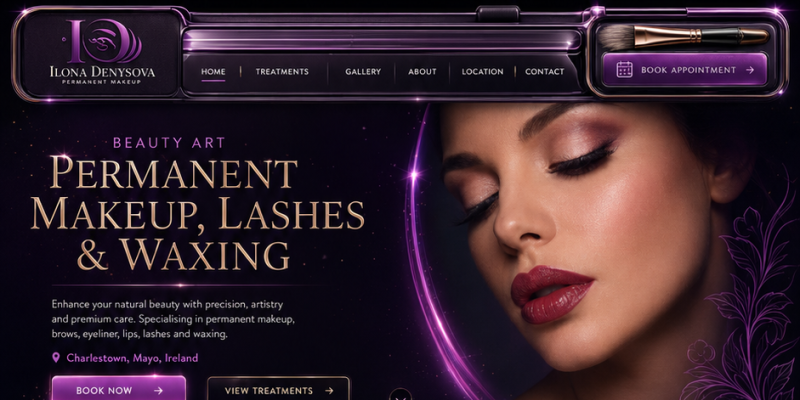
Permanent Makeup Studio Website Demo
Permanent Makeup Studio · Ireland
A premium mobile-friendly website demo for a permanent makeup and beauty studio with clear services, pricing, booking, and contact options.
 Automotive
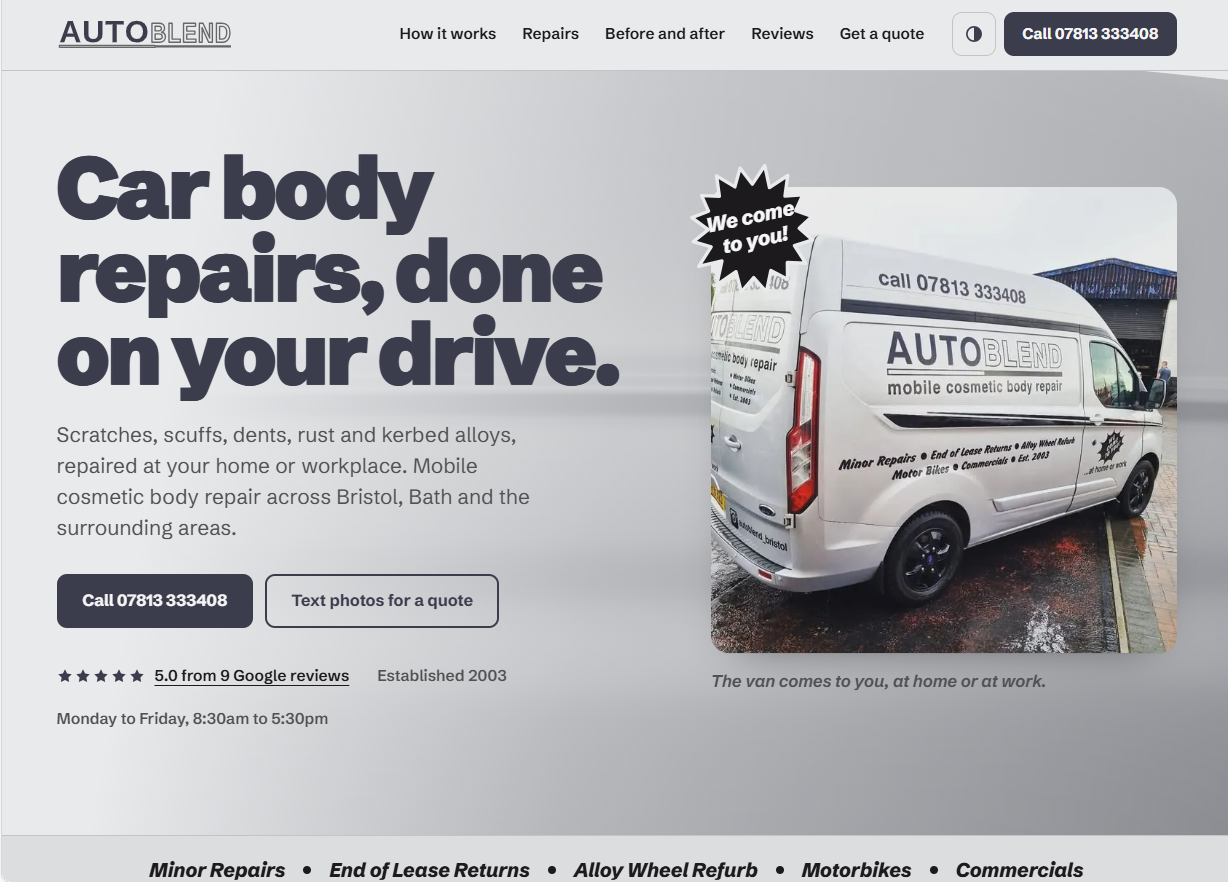
Autoblend Bristol Website Demo
Auto Body Repair · United Kingdom
A single-page demo website for a 5.0-rated mobile car body repairer covering Bristol and Bath, built from the van's own sign-writing, with Three.js scenes and text-message quote requests.
A clear starting point for your budget
Compare the usual project levels. Your final fixed quote is confirmed after we understand the real scope.
Common questions
Clear answers before you decide.
These answers explain the usual scope. Your proposal will confirm what applies to your project. Ask a specific questionCost depends on the number and complexity of user journeys, supported platforms, backend requirements, integrations, security and release support. Discovery is used to turn the idea into a scope that can be estimated responsibly.
A focused MVP may take weeks or a few months; a larger product can take considerably longer. The answer depends on decisions, integrations, content, testing and store requirements as much as coding speed.
There is no universal winner. Native can be appropriate for deep platform features or maximum platform-specific control. Cross-platform can reduce duplicated work for many business apps. We recommend based on the actual product and long-term maintenance.
Often, yes, if the existing system provides a secure and suitable API or another reliable integration method. Discovery confirms available documentation, data ownership and technical constraints.
Release support can be included. Your organisation should normally own the developer accounts, while we help prepare builds, required assets and technical information for submission. Store approval remains controlled by Apple and Google.
Mobile operating systems, devices and store policies continue to change. A post-launch plan can cover monitoring, fixes, dependency updates and evidence-led product improvements.
Turn the app idea into a scope you can evaluate.
Tell us the user, the problem and the systems involved. We will help identify the most useful first release.
- No obligation or sales pressure
- A real human reviews every enquiry
- Your details are used only to answer this request
Guidance related to this page
Selected by location, industry and service relevance—not simply by publication date.
Web Design & UX
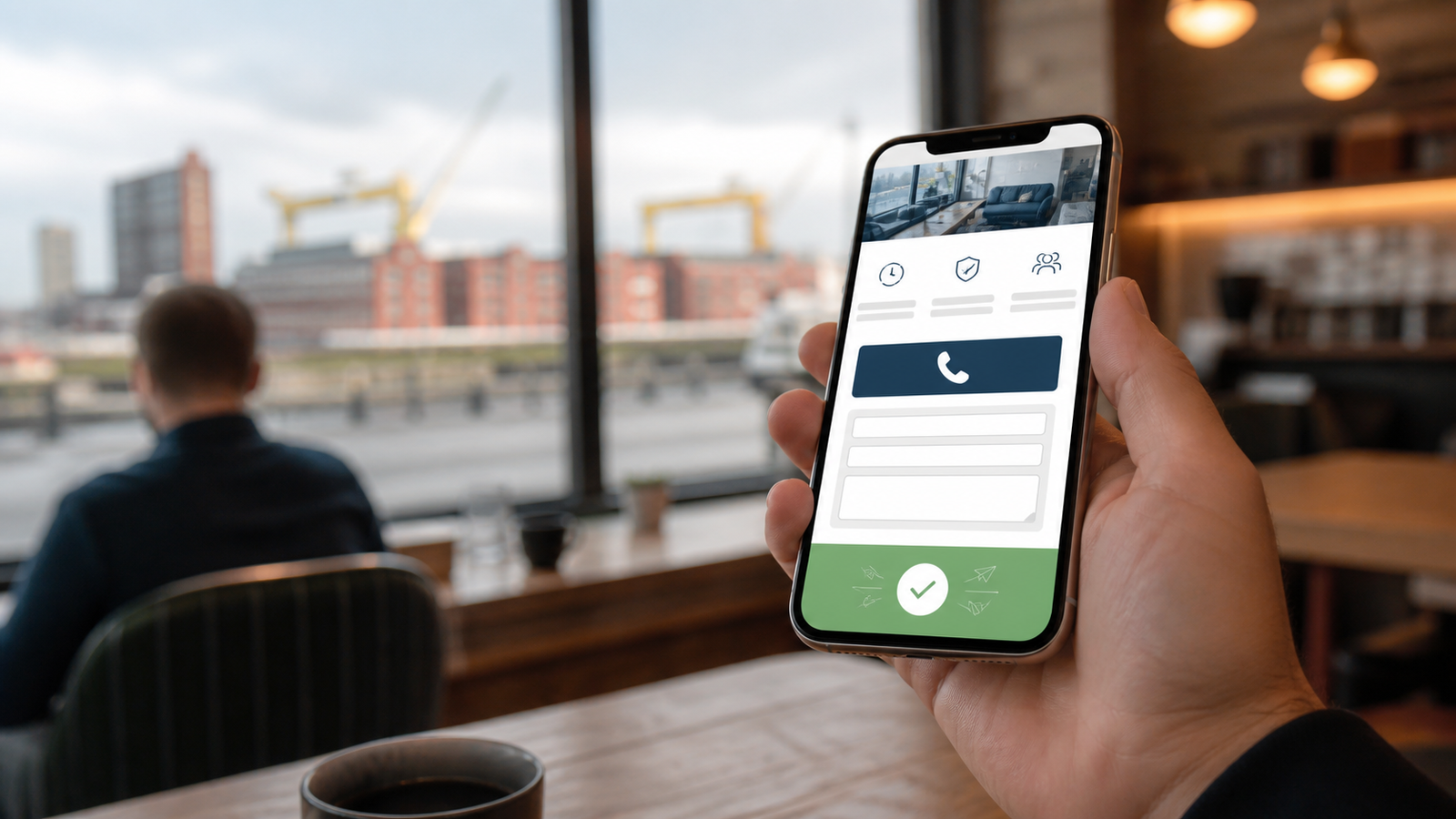
How Belfast Businesses Can Turn Mobile Visitors Into Enquiries
A practical mobile conversion checklist for Belfast service, hospitality and professional businesses that want more useful enquiries.
Read More
Web Design & UX
Why Mobile-Friendly Website Design Matters in 2026
Learn how mobile-friendly website design improves trust, enquiries, accessibility, performance and search visibility—and how to test it properly.
Read MoreConnected capabilities