Website Strategy for Bristol Creative, Tech and Green Businesses
A website-planning guide for Bristol businesses balancing creative work, technical detail, sustainability evidence and lead generation.

Article guide On this page
Bristol businesses often combine strong creative presentation with technical or environmental substance. The website has to communicate both. A striking portfolio without context can leave commercial buyers unsure about fit, while a dense technical site can hide the value behind terminology.
A useful strategy begins with audiences and decisions, then chooses the pages, proof and responsive design needed to support them.
Map audiences before mapping pages
A creative studio may speak to brand teams, agencies and recruits. A technology company may need paths for users, technical buyers, partners and investors. A green-economy supplier may address facilities teams, procurement and community stakeholders. Those groups should not all be forced through identical copy.
For each audience, define the main question, the evidence they need and the action they should take. This becomes the basis for navigation and page hierarchy.
Turn broad positioning into verifiable detail
Bristol City Council's Economic Strategy 2025–2035 highlights strengths in professional, scientific and technical activity, financial and insurance services, information and communication, and creative industries. The city's strategy also emphasises innovation and the transition to a greener economy.
On a company website, labels such as innovative, sustainable or data-driven should lead to evidence. Show the method, project, certification, result or team expertise behind the claim. If an environmental outcome is estimated, explain the basis. If a creative result is subjective, provide the brief and reasoning rather than an unsupported superlative.
Use a page structure that supports comparison
A practical structure might include:
Homepage: positioning, priority audiences and strongest proof.
Service or solution pages: one clear problem and outcome per page.
Sector pages: only where the approach, constraints and evidence genuinely differ.
Case studies: challenge, work, result and relevant limitations.
About and expertise: people, methods, partnerships and verified credentials.
Bristol page: authentic city relevance, service coverage and local pathways.
The structure should remain small enough to maintain. A focused collection of strong pages is more useful than dozens of thin variations.
Design one hierarchy across desktop, tablet and phone
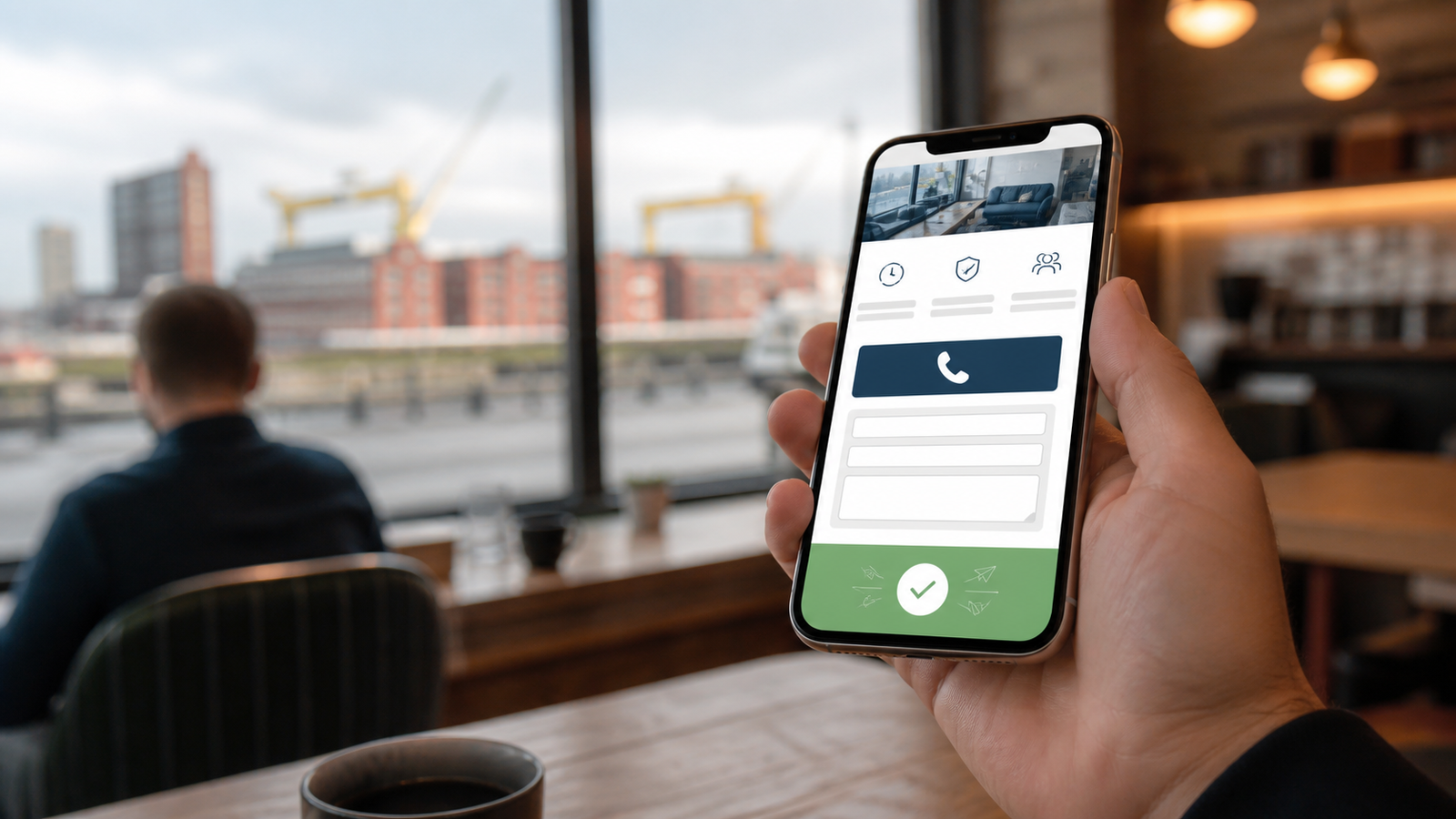
Responsive design is not simply shrinking columns. On a phone, a wide project grid may become a sequence, technical diagrams may need a simplified view and long forms may require fewer fields. The primary message and next action should remain obvious at every size.
Test real tasks: Can a buyer compare two services? Can they view a case study without losing their place? Can they find a technical detail and then enquire? Can a recruit reach open roles without passing through sales content?
Choose conversion paths by buying stage
A visitor at the start of research may prefer a capability guide or case study. A ready buyer may need a consultation, estimate or technical conversation. Offer a small number of relevant next steps rather than placing the same “contact us” button after every paragraph.
Forms should collect enough context to route the enquiry but avoid asking for a full project brief on a phone. Confirmation messages should set expectations about response time and what happens next.
Build local relevance without copying location pages
A Bristol page can discuss genuine work with city audiences, realistic coverage and relevant sectors. It can link to the services and case studies most useful to those visitors. It should not reuse the same copy for Bath, Cardiff or another market. Google's spam policies caution against substantially similar regional pages that merely funnel visitors to the same destination.
Use a quarterly evidence review
Every three months, review whether services, team details, certifications, project outcomes and calls to action are current. Remove claims that can no longer be supported. Add a case study when it answers a sales question better than another general article.
Make the Bristol website useful before making it bigger
A clear audience map, evidence plan and responsive conversion journey provide a stronger foundation than a large collection of pages. See our approach to website design for Bristol businesses or browse UK web design services. Stars Web Studio can prepare a free tailored demo using your real business details.